Scholars examine late Sardauna’s vision, philosophy at Arewa House dialogue
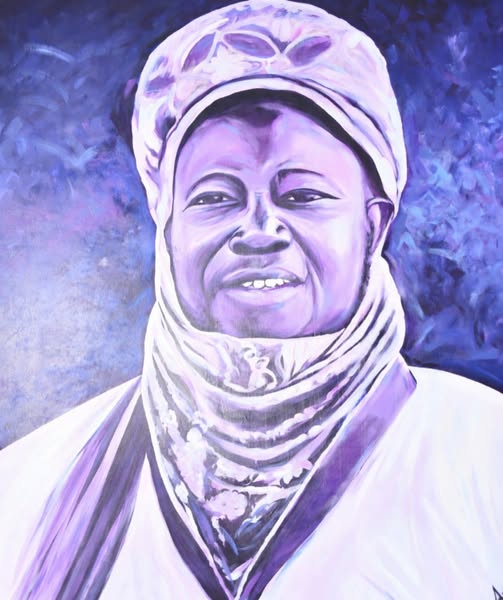
Scholars have come together at a one-day roundtable dialogue to reflect on the enduring legacies of Sir Ahmadu Bello, the Sardauna of Sokoto and Premier of Northern Nigeria, 60 years after his demise.
The one-day round table dialogue took place at the main Auditorium of the Centre for Research and Historical Documentation, Arewa House, Ahmadu Bello University.
The dialogue, themed “Remembering Sir Ahmadu Bello, Sardaunan Sokoto Sixty Years After: A Dialogue in Unity and Vision”, examined the leadership philosophy, style of governance, and development initiatives to reflect and assess their relevance in contemporary Nigeria.
Panelists at the roundtable deliberations highlighted different dimensions of Sir Ahmadu Bello’s legacies cutting across unity, education, leadership, institutional development and industrialisation.
In his presentation, one of the panelists, Prof Ahmed Bako of the Department of History and International Studies, Usmanu Danfodio University, Sokoto, posited that Sardauna tried his best for Northern Nigeria to the extent that throughout the region everybody wanted to be called Sardauna.
Prof Bako argued that Sardauna was exceptional because he did not engage himself with primitive accumulation.
Bako said the late Premier had not demonstrated interest in modern world pleasure, and remained humble in his life which is the opposite today.
According to him, Sir Ahmadu Bello’s priority was investment in education, politics, religion and the most enduring was the legacy of unity.
He stressed that he was not manipulated by colonial policy of divide and rule.
Another panelist, Prof Asma’u Garba Saeed of the Department of History, Bayero University, Kano explained that the contributions of Sardauna on education and social development were remarkable.
According to Asmau, when politics came, he was asked to represent Sokoto in the Regional Assembly, later Minister of Works, Local Government, Productions, at different times and eventually became the Premier.
Prof Asmau reiterated that Sardauna’s area was the north, thus his manifesto was serving the north and its people.
She said that in the late 1950s and early 1960s, there were very few people who were educated, and therefore, the Premier took an aggressive policy to tackle that.
She also said that schools were built in all parts of the region which included technical colleges and health institutions, among others, which were referred to as the Northern Action Policy.
Asmau said Northern Regional Literacy Agency (NORLA) took charge of publishing along with Gaskiya Production Company and that by 1954-55 about 163 students were given scholarships and sent abroad to study.
Also speaking, Prof Dayyabu Muhammad Hassan from the Department of Political Science and International Studies, Ahmadu Bello University, Zaria submitted that the north which Sardauna worked for and was killed, never divided like it is widely divided today.
Prof Dayyabu revealed that Sardauna knew that the north was vulnerable yet applied vision, commitment, dedication, resilience and courage to face issues head-on, which informed how he worked for the unity of the country.
Dayyabu, however, outlined that creation of the 12 States in 1967; the nature of the military governments which was hierarchical and concentrated at the centre; and the issue of oil money disunited the north compared to the time of the late Premier.
He expressed hope that things could change, but getting somebody who could stand in and unite the north is what is difficult, because states that were created could be reversed, but dependence on oil money can be reversed.
Hassan maintained that ethnicity and religion should not be northern problems, because if God wanted it the trans-Saharan traders that brought Islam to the north could have brought Christianity as religion.
While the European powers who came through the Atlantic ocean and brought Christianity, could have brought Islam instead.
……………………………………..
Public Affairs Directorate,
Office of the Vice-Chancellor,
Ahmadu Bello University, Zaria (AAI)
26th Thursday, 2026