

AI, varsities and responsibility, by BUK former VC Prof Rasheed
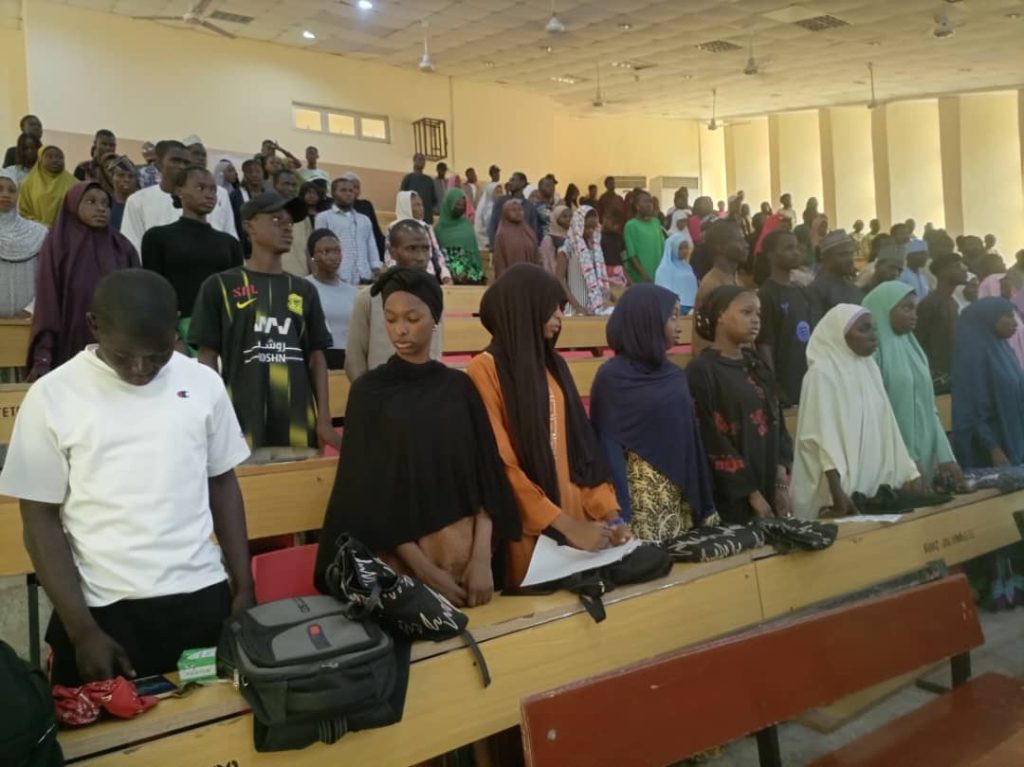
Former Vice-Chancellor, Bayero University, Kano, Prof Abubakar Adamu Rasheed, was the guest speaker at the 41st Annual Conference and Diamond Jubilee of the English Scholars’ Association of Nigeria (ESAN) held at Ahmadu Bello University, Zaria.
Specifically, Prof Rasheed gave a keynote address at the English scholars conference, themed ‘Rethinking Identity in Language, Literary and Communication Studies in the Digital Age’.
He spoke on AI, universities and responsibility, saying artificial intelligence poses profound questions for education.
Prof Rasheed asked: “If machines can retrieve information, summarise books, translate languages and produce essays, what remains distinctive about the university?”
Rasheed, who was the Executive Secretary, National Universities Commission (NUC), explained that the answer is that education has never simply been about access to information.
“Knowledge requires interpretation. Evidence requires judgement. Information is not wisdom”, he said.
According to him, the abundance of information may indeed make the university more necessary rather than less so.
Prof Rasheed argued that the future may be increasingly intelligent, but it must remain profoundly human.
He said the educational challenge is increasingly shifting from finding information to judging its reliability; from producing text to evaluating meaning; and from obtaining answers to learning how to ask worthwhile questions.
Rasheed also said this is why universities should neither reject artificial intelligence nor surrender to it and that the appropriate response is responsible engagement.
He urged universities to incorporate into their curricula digital literacy, artificial intelligence and emerging technologies while preserving the intellectual foundations of scholarship.
“Above all, we must remember: competence in prompting cannot substitute for for competence in thinking”, he also said.
He said the greatest educational danger of generative AI is perhaps not simply plagiarism, stressing that the deeper danger is the gradual surrender of intellectual agency.
According to him, the future of English studies should not be imagined as a defensive struggle to preserve an endangered past.
“When machines generate language, the study of language becomes consequential. When algorithms circulate narratives, questions of representation become more urgent.
“When synthetic media complicate the distinction between evidence and fabrication, critical interpretation becomes a civic necessity. When information becomes abundant, judgment becomes precious”, he stressed.
He said the central challenge is therefore not simply whether artificial intelligence will become more powerful, stressing “it almost certainly will”.
Prof Rasheed further said the decisive question is not simply what machines can do, but it is what human beings will choose to do with what machines can do.
……………………………………
Public Affairs Directorate,
Office of the Vice-Chancellor,
Ahmadu Bello University, Zaria (NEWS/SGB)
Saturday, 12th September, 2026